The EPA Must Test the Plants of Newtown Creek.

HarborLAB caused quite a stir recently by drawing attention to the fact that the U.S. Environmental Protection Agency isn’t testing plant tissues in the Newtown Creek. This great research gap had not been addressed before. We raised the point at the October meeting of the Newtown Creek Community Advisory Group with the EPA about Superfund progress.

Our concern is informed by our periodic biota surveys. We thank the United Nations Federal Credit Union and Con Ed for their support of our environmental work.

The EPA noted in its presentation that it tests the tissues of some fish species, especially those most likely to be eaten by people, but admitted in response to HarborLAB’s questioning that no plant tests were conducted or scheduled to be conducted. The EPA also asserted that because the creek was so thoroughly bulkheaded, there wasn’t a plant population to test. HarborLAB has conducted bioblitzes of the creek and strongly disagreed, suggesting that nonprofits and universities could begin plant tissue tests even if the EPA wouldn’t. Representatives from Riverkeeper, North Brooklyn Boat Club, and LaGuardia Community College quickly seconded HarborLAB’s concerns.

HarborLAB’s launch already boasts indigenous, salt-tolerant goldenrod, pokeberry, milkweed, and other species that support birds and pollinators. We’re working to add cordgrass, beach plum, and more as part of our GreenLaunch project. Marsh grasses, reeds, and other plants fringe the creek where there are no bulkheads or where bulkheads have crumbled. Above the bulkheads but still within occasional flood zones are a number of plant species, whether native, invasive, or cultivated. There are even fruit trees, including fig, apple, pear, and mulberry. Within the creek, HarborLAB has observed sea lettuce, bladderwrack, mosses, and more.

At the request of LaGuardia Community College biologist Sarah Durand, PhD, HarborLAB has been photographing shoreline and aquatic plants. Dr. Durand and her students have begun growing marsh grass in buckets and planters as experiments in anticipation of installing habitat restoration platforms. We will soon join the Newtown Creek CAG, which counts Dr. Durand as a steering committee member, in formally urging the EPA to reconsider its assessment and add plant tissue testing.

It’s absolutely necessary that the EPA expand testing to include plants and smaller animal organisms, like invertebrates and killifish who spend their entire lives in the creek. These are the complex organism building blocks this blighted corner of the estuary. As Newtown Creek Alliance Mitch Waxman remarked to HarborLAB after the meeting on the narrowness of the EPA’s work: “What the EPA is doing is a human health impact study, not an environmental impact study.”

Gallery of Newtown Creek plants by Thomas Zellers and Erik Baard.

Videos by Roy Harp showing moss and algae.

Video by Roy Harp showing spartina installations.

Hallets Cove Still Needs Help

Film on the water at Hallets Cove. Photo by Erik Baard

Film on the water at Hallets Cove. Photo by Erik Baard

HarborLAB is sad to relay the news from CUNY LaGuardia Community College that bacteria counts remain elevated days after the New York City Housing Authority capped open drains that allow sewage to discharge from the Astoria Houses into Hallets Cove. As we noted earlier, there’s no “silver bullet” to raising water quality. Dogs and birds frequently defecate on the beach. HarborLAB photographed paw prints and birds yesterday afternoon. As the NYC Department of Environmental Protection noted, wild birds can’t be effectively managed.

Most parts of the estuary suffer fecal bacteria when rain causes combined sewer channels to overflow. Hallets Cove is blighted even in dry weather. Here’s this month’s observed rainfall.

We as a community must sample the water and sand further (HarborLAB will do this in the colder months), work with NYCDEP and CUNY LaGuardia Community College for regular testing, and institute both basic and innovative mitigation measures. HarborLAB need volunteer samplers to keep a neighborhood watch on Hallets Cove water quality. Please email volunteer@harborlab.org with the subject line, “Hallets Cove.”

Here are questions HarborLAB posed to scientists with the NYC Department of Environmental Protection and CUNY in an email conversation that included Rob Buchanan of the NYC Water Trail Association, which coordinates water sampling throughout the harbor:

1) Could such a prolonged exposure (referring to the NYCHA discharge) translate to a slower decline?
2) Could sand culturing of the bacteria cause it to persist?
3) How might activated effective microorganisms be used to mitigate this situation? Does the DEP have a research program or field implementation in place? Partners from the Permaculture movement are interested in contributing to such an effort.
4) How might we reduce dog defecation on the beach?

As measured by Dr. Sarah Durand’s lab at LaGuardia Community College, indicator bacteria counts were again in the “red zone” with183-197 CFU (colony forming units) per 100 ml of water. Observing over 104 enterococci per 100 ml in salt water indicates that an area is unacceptable for swimming, according the the US Environmental Protection Agency. From the EPA website:

What levels of indicator bacteria are considered acceptable?

Based on studies conducted in the 1980s, EPA has determined that a geometric mean (a measure of an overall average) in samples from recreational waters of less than 126 E. coli per 100 milliliters (ml) of fresh water or 35 enterococci per 100 ml of salt water is acceptable for protection of swimming. The geometric mean should be calculated from more than five samples within the previous 30 days. If a single sample exceeds 235 E. coli per 100 ml in freshwater and 104 enterococci per 100 ml in salt water, EPA recommends that the beach be closed, or posted, for swimming until levels are lower. (Some states, such as New Hampshire and Vermont, recommend that advisories be posted at more protective levels of indicator bacteria.) Because elevated fecal indicator bacteria are often associated with storm water runoff, some agencies post beaches preemptively if rainfall exceeds a set amount, based on site-specific studies.

durandtests

Contaminated samples fluoresce under UV light due to a chemical reaction between bacterial excretions and a laboratory agent. Photo by Dr. Sarah Durand, PhD, CUNY LaGuardia Community College.

There are no universal health standards for water quality restrictions on such high-water contact activities as introductory sit-on-top kayaking. Even without falling in, children and adults engage in splashing and have frequent hand-to-mouth and hand-to-eye transference of water. Children and adults do fall in (this is normal, but shouldn’t be risked in fouled water) , and after hours children do wade, swim, make sandcastles at Hallets Cove. It’s reasonable to believe that public boating might encourage children and families to believe the water is acceptable.

Sand is more of a concern than was believed in previous generations. Some useful links:

“Microbial Load from Animal Species at a Recreational Beach”

http://www.ncbi.nlm.nih.gov/pmc/articles/PMC2771205/

“Fecal Bacteria May Be Hiding in Beach Sand”

http://www.care2.com/causes/fecal-bacteria-may-be-hiding-in-beach-sand.html

“Bacteria Swarm Keeps Oceanfront Revelers Out of Water”

http://hamptonroads.com/2014/08/oceanfront-swimming-advisory-completely-lifted

paws

gulls


Algonquin Tour Shorts, Raw Footage

HarborLAB was privileged to host an Algonquin Tour of the Newtown Creek. Our lecturer was Prof. Evan Pritchard of Marist College, a scholar of Mi’kmaq heritage and founder of the Center for Algonquin Culture. He is the author of several books about the First Nations of North America, especially our region. We were honored to include Dorothty Morehead, Interim Chair of the Newtown Creek Alliance, Matt Malina, Founder of NYCH2O, and urban ecology blogger Patrick Coll among our participants.

This is the first Native American tour of the Newtown Creek, a U.S. Environmental Protection Agency-designated Superfund site because of the industrial toxins in its sediments. This video was shot by Prof. Scott Sternbach, acclaimed nature photographer, director of CUNY LaGuardia Community College’s photography and video department and Chair of HarborLAB.

These are just shorts taken from our event, and the audio will be enhanced, especially for the beginning section. Full raw footage will be made available to academics and a we’ll release a polished final cut video for the public. Prof.Pritchard offers blessings for the boats by burning sage and discusses diverse topics, including the lands and peoples of the Newtown Creek, how tulip tree canoes (moo xool) were communally shared, and evidence for extensive maritime trade within the Americas before European contact.

We are very grateful to the NYC DEP for its permission to land at the Newtown Creek Nature Walk steps.


Great HarborLAB Launch Work Party!

100_0907

Boat launch property before most work hard begun. Photo by Wesley Miller.

HarborLAB volunteers cleaned up our 125′ x 21′ waterfront space and installed a boat launch so that in 2014 we can offer more frequent programming, host and assist student research projects, and bring robust community life and a richer ecosystem to the shore. We’re very grateful to Community Board 2 Environmental Chair Dorothy Morehead for storing our boats for the summer in the yard behind her Sunnyside office, with our gear and materials in her basement.

Our space, which is at the end of Vernon Boulevard, is generously provided by Schuman Properties (family owned, along with Propper Manufacturing). We have great co-tenants, including the Circus Warehouse. The chief inspiration for the site revamp was our recent purchase of a boat trailer from Jersey Paddler. Other recent funds enabled us to budget for security cameras, locks and chains, sheds, and property improvements.

The property was unusable due to Hurricane Sandy debris and recovery period dumping, as well as loose pallets of bricks and dense and extensive weed growth. The crumbling bulkhead also left us with a steep and unstable gradient. The first reclamation work was done by Wesley Miller, who single-handedly weeded much of the tract, allowing a trailer to roll in while leaving weeds that held down soil on slopes. Wesley also restacked bricks that fell from pallets.

Then came HarborLAB’s work party! Our labor was fueled by amazing Italian food from Manducatis Rustica, which is further up Vernon Boulevard. We were glad to welcome three new volunteers, Dr. Minerva Ahumada (professor of philosophy at LaGuardia Community College — and boy do her students love her!), David Pugh (a Time’s Up! activist referred to us by HarborLAB board member Joel Kupferman, founder of the NY Environmental Law and Justice Project), and artist Becky Chipkin.

Schuman Properties kindly ordered a dumpster, which ten volunteers filled rapidly with all manner of junk. We also moved thousands of bricks by hand, assembly line style, to further open up space near the gate. We also installed a mailbox, began gate repairs, and installed a wooden boat launch. LIC-based artist and sailor Ilan Averbuch creates massive sculptures, so he’s offered to help move some pallets of bricks with his forklift.  HarborLAB Facilities Manager Patricia Erickson oversaw all work, while Mairo Notton particularly focused on our boat launch.

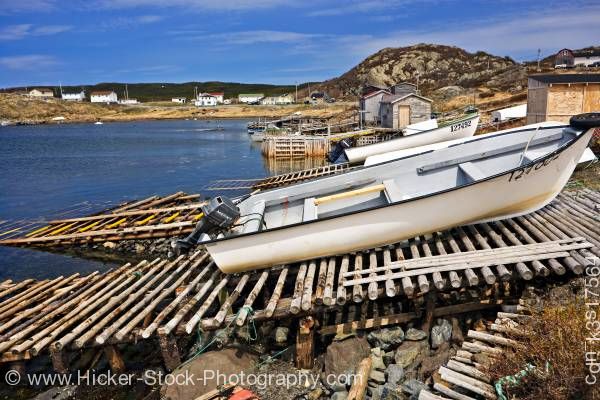
Our boat launch is inspired by Viking-style wooden ramps, which Rob Buchanan of the Village Community Boathouse also called a “dory ladder.” These are still in common use, for example in Newfoundland. In our case, to save time and some of HarborLAB’s budget, Founder Erik Baard donated his futon frame. Whatever works!

Future plans include salt-tolerant native species to hold the shoreline together, spartina marsh grass planting, a work platform for research, a dock, shipping containers for storage once the bricks are removed this winter, and much more! We’re also working to ensure our improvements are inclusive of the sailors already present, with stronger tie-ups, stairs and paths down (also sparing planted areas), and community building activities.

100_0898

Overgrown space with dumping, including heavy buckets with unknown contents. Photo by Wesley Miller.

100_0887 (1)

Some of the many bricks on the site that had to be moved and stacked. In total, there are perhaps 50,000 bricks. Photo by Wesley Miller.

1236829_10151903209059878_350398135_n

Now the work can begin with gusto — the dumpster arrives! Photo by Erik Baard.

WP_20130907_027

Volunteer Co-Manager Caroline Walker lassos the gate post to pull it upright, while Facilities Manager Patricia Erickson directs from below and sets the line.

1238061_10151904319324878_1130486417_n

Sally Attia, Mairo Notton, and David Pugh install the boat ramp, which Mairo assembled out of Founder Erik Baard’s futon frame. David’s shirt also provides a great chance to salute pioneering urban environment group Time’s Up! Photo by Erik Baard.

WP_20130907_030

Mairo Notton tests the repelling aspect of his boat ramp masterpiece. Photo by Erik Baard.

WP_20130907_029

David Pugh and Becky Chipkin inaugurate the boat ramp, both launching and landing, while Sally Attia helps. . Photo by Erik Baard.

WP_20130907_016

David Pugh, Sally Attia, and Manny Steier organize the huge task of moving bricks out our working area. Patricia Erickson was the spur and inspiration that made us believe we could do it in a day. Photo by Erik Baard.

WP_20130907_036

Mairo Notton upped the ante in brick carrying, with 15 at a time. Sometimes 18, simply to show off. He also tested Erik Baard’s ability to do so — Erik passed, but this remained Mairo’s signature achievement. Photo by Erik Baard.

1238310_10151904422629878_1637555321_n

More bricks, bricks, bricks. We did it in a continual human chain, with specialized stackers at either end. Here camera shy Dr. Minerva Ahumada, professor of philosophy at LaGuardia Community College, scoots out of frame while HarborLAB Operations Manager EJ Lee enters. One wonders if the myth of Sisyphus prepared Minerva for this task. Photo by Erik Baard.

WP_20130907_035

We still had time for love. David Pugh, Becky Chipkin, a dumpster, a sign warning of the END, and the new World Trade Center rising over the Newtown Creek mouth. Photo by Erik Baard.

1176147_10151905039039878_407909366_n

In an unusual move, a seaplane used the Newtown Creek as a runway — toward Manhattan. Photo by Erik Baard.

WP_20130907_050

Making us more official, Facilities Manager Patricia Erickson and Mairo Notton install a mailbox by the gate. Photo by Erik Baard.

WP_20130907_057

As we feasted on Manducatis Rustica’s food, our North Brooklyn Boat Club neighbors across the Newtown Creek set off on an overnight Manhattan circumnavigation. We called out our well wishes for the canoeists, kayakers, and rowers. Photo by Erik Baard.

WP_20130908_012

In daylight we saw the full dumpster. Photo by Erik Baard.

WP_20130911_005

And off goes the site junk! Photo by Erik Baard.

WP_20130908_004

Canoes and trailer on site and secured. Kayaks to soon follow. Photo by Erik Baard.