May 9: Riverkeeper Sweep Season Opener!

The HarborLAB GreenLaunch on the Newtown Creek.

The HarborLAB GreenLaunch on the Newtown Creek.

Thinking ahead to spring yet? Well, here’s a glimpse of our May 9 season opener!

We’ll hit the water for the first time next season as part of the great Riverkeeper Sweep!

Here’s our Facebook event link:  https://www.facebook.com/events/1637103389849867/

Community groups throughout the estuary will clean our waterways.  Plastic debris is carried into the Newtown Creek from streets by combined sewer overflows (http://www.riverkeeper.org/campaigns/stop-polluters/sewage-contamination/cso/) and wind.

We’ll gather at 9AM, paddle the length of the creek (especially the Queens side) by canoe, and then return by 4PM. High water will be shortly after 2PM. We’ll share a celebratory meal afterwards! Perhaps at The Creek and The Cave (https://www.facebook.com/pages/The-Creek-and-The-Cave/113823948652531)? Where else? 🙂

If you can’t participate in HarborLAB’s sweep, sign up with a partnering organization near you:

http://www.riverkeeper.org/news-events/events/rvk-events/riverkeeper-sweep-2015/

“Lady Ganga” and Her Voyage to Save Lives.

Those who HarborLAB seeks to serve above all are the youth of New York City. Our core mission is to instill in them a love of socially responsible science. No young person should lose his or her mother, or one day her own life, to a preventable killer like cervical cancer. Sadly, millions of women worldwide die from this disease each decade, and many millions more are left in pain and unable to have children. Men suffer from similar cancers.

The cause is the human papillomavirus, which infects most sexually active adults in the U.S. at some point in their lives, and is preventable with a safe vaccine. This shot, which can be given along with other routine vaccinations, is most effective when administered before the patient becomes sexually active. Some express worry that taking this measure cautiously early — with preteens and early teens — will encourage promiscuous behavior, but only doctors and parents need know the purpose of this one vaccine among several. This is a life-saving, moral application of science and it’s available to all families in New York City. Click here to learn more. Tragically the HPV vaccine not as available globally.

Stand up paddleboard athlete, kayak guide, and mother Michele Frazier Baldwin dedicated the last months of her life to a record-setting 700-mile voyage down the Ganges River to raise awareness and funds so that girls raised in poverty can be vaccinated. She asked that donations be made to the Global Initiative Against HPV and Cervical Cancer. A film is being made from raw footage of that meaningful adventure, with all profits going to the cause she championed. You can help by contributing to the Kickstarter campaign for the film, “Lady Ganga,” by Frederic Lumiere.

We honor Michele Frazier Baldwin’s life, paddling accomplishment, and great cause. We also respect, and advocate for, the moral application of medical science to save the lives of young people just as we respect, and advocate for, environmental science to save the lives of humans and other species with whom we share the Earth.


HarborLAB Intern Presentation on Water Quality

10443411_1508493156037536_7671229028423583469_n

HarborLAB Environmental Science Intern Erik Yax Garcia of Keuka College made a presentation about water quality sampling and testing to the Hunters Point Community Middle School this week. He demonstrated sampling and explained the need for precise, uniform techniques. Then in the classroom he gave a PowerPoint presentation about the science used to identify water quality problems and solutions.

“For me it was a great experience to work with middle school students and it was very challenging because they would ask for details and deep explanations,” Erik said. He noted that a central question was, “what can we do to have clean water?”

Thanks to a grant from the United Nations Federal Credit Union, Erik takes weekly water samples from Willow Lake and Gantry Plaza State Park for pathogen testing at The River Project. He also picks up Bronx Kill samples taken by Randall’s Island Park Alliance. The lab’s looking for Enterococcus, a kind of bacteria that normally lives in human intestines and can therefore reveal the presence of sewage in a waterway. Rainstorms overwhelm our waste water treatment facilities because household water and street runoffs pour into the same tubes and containments. When that happens, raw sewage is released into the estuary in “combined sewer overflows” (CSOs) to prevent disease-bearing foul waters from backing up into homes and streets.

Erik’s visit melded with the students’ curriculum, said science teacher Mary Mathai. “Erik Yak’s presentation was very informative. This worked very well since in their present unit of study, we have been talking about the enterococcus bacterial levels in the water and about CSO’s,” she said.

Mathai praised how methodical Erik was in his instruction. “He introduced students to the sampling sites in his presentation. He also showed them a video on the CSO’s.  This was followed by a demonstration of how water samples are collected with importance given to preservation of the samples and avoidance of contaminating the samples.Photographs of the enterococcus bacteria were shown to students.  This was very much tied into what students were learning in the classroom, since they were involved in a project based learning activity regarding CSO’s and water quality in New York Harbor.  Students were then taken to the sampling site in Long Island City, where Erik demonstrated the water sample collection.  This was followed by a question and answer session,” she recounted.


NYC is behind schedule in fixing the CSO problem, but has spent billions of dollars toward that end in recent years. Traditional engineering solutions are termed “grey infrastructure” because they rely on concrete catch basins and new facilities. Another set of solutions gaining favor now are grouped together as “green infrastructure” because they rely on plants and are sustainable and resilient. Green roofs, bioswales, tree pits, and other planting absorb rainwater into soft earth and up through roots so that less pours into the sewer system.

We’re happy to report that water at Gantry Plaza State Park, where HatbotLAB will offer public paddling this summer, has tested as cleaner than other western Queens sites (Hallets Cove, Anable Basin, Newtown Creek) in this year’s first few weeks. This activity is part of a broader “citizen science” project coordinated by the NYC Water Trail Association, a network of paddling and rowing groups that HarborLAB Founder Erik Baard also initiated and co-founded.
a
The students revealed that they have a big stake in improving water quality, Erik said. “I also spoke about HarborLAB’s paddling program and many students seemed to be excited about it!”

June 14 Saturday Science Stumper!

incubation

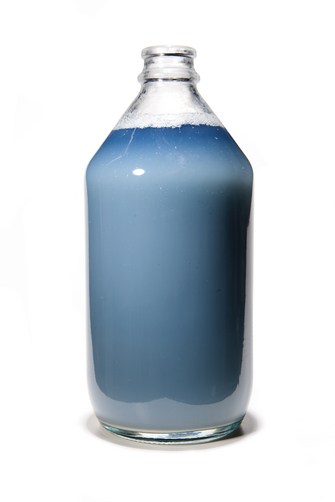
Welcome back, Chrono Art Clock! What? It’s not the clock that befuddled Oscar Madison on “The Odd Couple” in 1973 (appearing at 12:45)? No. But it does tell you if it’s a safe time to be in the water! So what are we looking at?

ANSWER TO LAST WEEK’S SATURDAY SCIENCE STUMPER:

Horseshoe Ctab Blood

MARK THIESSEN/National Geographic Creative


Much like the Vulcans of “Star Trek,” horseshoe crabs have blood that uses copper instead of iron to transport oxygen. It also happens that their blood is a fantastic tool for detecting bacteria that might contaminate pharmaceutical instruments and injections. Horseshoe crabs (not really crabs at all) are captured, tapped for blood to be used for this purpose, and released. For those of us who are less bloodthirsty, you can see their moon-driven, ancient mating migrations this weekend along beaches throughout NYC! More about our local horseshoe crabs at Nature Calendar.