African Americans in Marine Sciences

African Americans have made contributions to maritime history and the sciences from the colonial period forward. The first wave of academically credentialed African American marine scientists, however, would not be born until toward the end of the 19th century. HarborLAB serves budding African American scientists through its youth programs each year, and for Black History Month honors trailblazers from years past.

Outstanding among the first generation of African American university scholars in the marine sciences were Ernest Everett Just and Roger Arliner Young, both born in the 1880s. Both went to prominent universities and did field-shaping research at Woods Hole Oceanographic Institution, but white students were deprived of their gifts as teachers because of racial bigotry. Fortunately Dr. Just and Dr. Young received faculty appointments at historically black institutions where they inspired new generations of scientists.

just

Ernest Everett Just

Dr. Just was renowned as a master designer of experiments. Though he died before the discovery of DNA, Dr. Just focused on eggs, especially those of marine invertebrates, because he saw them as the key to understanding life as an emergent complex system. An excellent biography of Dr. Just is Black Apollo of Science, which was a Pulitzer Prize finalist.

Roger_Arliner_Young

Roger Arliner Young

Dr. Young was the first African American woman to earn a PhD in zoology. She studied under Dr. Just and they both shared a mentor in Frank Rattray Lillie, a founder and first president of Woods Hole Oceanographic Institution. She performed cutting edge experiments on the effects of radiation on marine eggs. Her radiation work, study of cellular salt regulation, and dehydration and rehydration of living cells can be seen as a precursor to today’s booming field of extremophile studies. Understanding the extreme tolerances of terrestrial organisms aids astrobiologists searching harsher worlds for signs of life.

Despite the achievements of the generation of Dr. Just and Dr. Young, and those who followed, even today to be a black marine biologist or oceanographer is pioneering. Dr. Ashanti Johnson, oceanographer, shares her experiences and inspiration in the video above. Students entering the field will likely have few or no black professors. HarborLAB’s message to these students is a simple one: Please, don’t be discouraged. Don’t allow yourself to feel excluded. We need as many bright young people as possible to study these fields because with fish stocks crashing and coral reefs dying, and ocean acidity increasing due to carbon dioxide pollution, advancement of marine sciences is a matter of survival.

A great resource for students of color seeking careers in the STEM (Science, Technology, Engineering, and Math) fields is the Institute for Broadening Participation’s Pathways to Science program. HarborLAB strongly recommends studying with our Natural Sciences partners at CUNY LaGuardia Community College and CUNY Baruch College. And of course, HarborLAB volunteers serve students by introducing them to the greatest teacher of all: Nature. As Dr. Just describes his first classroom, it was not with four walls:

“[It] was full of birds and flowers, especially in the spring, when the wrens awakened to the smell of wisteria and dogwood. Azaleas and camellias blossomed along the ditches where tadpoles swam, and Spanish moss gleamed from the trees…”

If you are part of a school or community group and want to join HarborLAB in environmental service learning on our boats or ashore, please email edu@harborlab.org.

The Gift of Greater Safety!

ladder

HarborLAB is very happy to announce that this week we’ll be purchasing a dock ladder for Gantry Plaza State Park to make it easier, less stressful, and safer for people to climb out of the water. To our volunteers and partners, an even safer 2015 is the best holiday gift of all!

Unintended swims are a natural, if rare, part of kayaking. All participants and dock workers wear life vests, so not every dunk is an emergency. But every dunk has the potential to become an emergency should wakes, medical conditions, currents, or other factors add complications and dangers. It’s best to have a quick and safe way out of the water to where volunteers are ready to help.

HarborLAB volunteers have been advocating for public paddling programs at Gantry Plaza State Park for over a decade, even before our organization existed! We’re grateful and thrilled that through the efforts of the New York State Office of Parks, Recreation, and Historic Preservation and Metropolitan Waterfront Alliance that our dreams were realized. We’re also deeply grateful to the Hunters Point Point Parks Conservancy for partnering on outreach and volunteer recruitment for the public program. We pioneered public paddling and floating science programs in the park this year, to the benefit of Baruch College, Hunters Point Community Middle School, 350.org, and other environmental education partners.

The ladder we install will also be a boon to other programs at Gantry Plaza State Park, such as the recreational paddling program produced by the Long Island City Community Boathouse, which was also founded by Erik Baard, founder of HarborLAB.

HarborLAB is grateful to the New York State Office of Parks, Recreation, and Historic Preservation for permitting this ladder work and partnering with our skilled volunteers (contractors and mechanics) to see to the sturdiest and most user-friendly installation. We’ll look to the State to make the final determination of what ladder would be proper before we make the purchase from West Marine. We’re looking at lifting ladders and flip ladders to prevent slippery fouling of the lower rungs and damage at low tide.

And hey, if you’re wondering about water quality in Gantry Plaza State Park, we have great news! Water sampled by HarborLAB volunteers at Gantry Plaza State Park, as gauged by specific bacteria counts, routinely tests in LaGuardia Community College labs as far better than any other paddling program spot in western Queens! But though Gantry water is often swimming quality, we’re all about the boats, ’bout the boats. No treading…   😉

HarborLAB at Gantry Plaza State Park. Photo by Erik Baard.

HarborLAB at Gantry Plaza State Park. Photo by Erik Baard.

June 14 Saturday Science Stumper!

incubation

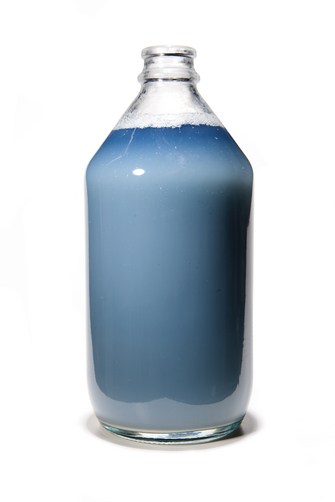
Welcome back, Chrono Art Clock! What? It’s not the clock that befuddled Oscar Madison on “The Odd Couple” in 1973 (appearing at 12:45)? No. But it does tell you if it’s a safe time to be in the water! So what are we looking at?

ANSWER TO LAST WEEK’S SATURDAY SCIENCE STUMPER:

Horseshoe Ctab Blood

MARK THIESSEN/National Geographic Creative


Much like the Vulcans of “Star Trek,” horseshoe crabs have blood that uses copper instead of iron to transport oxygen. It also happens that their blood is a fantastic tool for detecting bacteria that might contaminate pharmaceutical instruments and injections. Horseshoe crabs (not really crabs at all) are captured, tapped for blood to be used for this purpose, and released. For those of us who are less bloodthirsty, you can see their moon-driven, ancient mating migrations this weekend along beaches throughout NYC! More about our local horseshoe crabs at Nature Calendar.

June 1 Jamaica Bay Marsh Restoration!

IMG_6717

(Aerial photo of planting site by Public Lab and Louisiana-based Dredge Research Collaborative. Expand to see rows of seedlings)

10371387_10152523365481018_8032685643094581245_n

American Littoral Society, Google, Citizens Committee for NYC, and HarborLAB celebrate a great day of planting spartina to restore Jamaica Bay. Great job, HarborLAB Operations Manager EJ Lee and many thanks to our partners!

On Sunday, June 1, HarborLAB brought Citizens Committee for NYC and Google to paddle and help the American Littoral Society and Jamaica Bay EcoWatchers plant spartina marsh grass, a building block of our estuary ecosystem. We were thrilled to work beside Audubon volunteers and others, and to learn more about restoring vital saltwater marsh habitat. Many thanks to American Littoral Society Northeast President Don Riepe, who organized the full event, and Lori Lichtman, Development and Volunteer Coordinator for Citizens Committee for NYC!

Over the past century our region’s saltwater marsh grass areas have been reduced by 85% due to development, pollution, and other urban pressures. HarborLAB started “Cordgrass in the Classroom” to help students understand this problem and participate in its solution. Now we are combining planting and paddling into event days that augment the efforts of those leading the challenging work of restoration. The Google gaggle took turns planting thousands of seedlings and kayaking around areas where they could see mature plants supporting shorebirds, invertebrates, and marine life. It was fun to introduce Google employees and interns to this work, and to deepen our relationship with Citizens Committee for NYC. Thanks in great part to Citizens Committee for NYC, we will soon plant spartina and other native species at our launch site on the Newtown Creek!

This event was an achievement for HarborLAB because despite being a small and young organization, we produced two simultaneous programs on June 1, this marsh grass restoration and nature paddles by canoe on Willow Lake in Flushing Meadows-Corona Park. HarborLAB Operations Manager EJ Lee was our on-site leader at Jamaica Bay and Executive Director Erik Baard made the arrangements for both events while leading on-site at Willow Lake.

All photos in the gallery are by American Littoral Society and Citizens Committee for NYC.