June 1 Jamaica Bay Marsh Restoration!

IMG_6717

(Aerial photo of planting site by Public Lab and Louisiana-based Dredge Research Collaborative. Expand to see rows of seedlings)

10371387_10152523365481018_8032685643094581245_n

American Littoral Society, Google, Citizens Committee for NYC, and HarborLAB celebrate a great day of planting spartina to restore Jamaica Bay. Great job, HarborLAB Operations Manager EJ Lee and many thanks to our partners!

On Sunday, June 1, HarborLAB brought Citizens Committee for NYC and Google to paddle and help the American Littoral Society and Jamaica Bay EcoWatchers plant spartina marsh grass, a building block of our estuary ecosystem. We were thrilled to work beside Audubon volunteers and others, and to learn more about restoring vital saltwater marsh habitat. Many thanks to American Littoral Society Northeast President Don Riepe, who organized the full event, and Lori Lichtman, Development and Volunteer Coordinator for Citizens Committee for NYC!

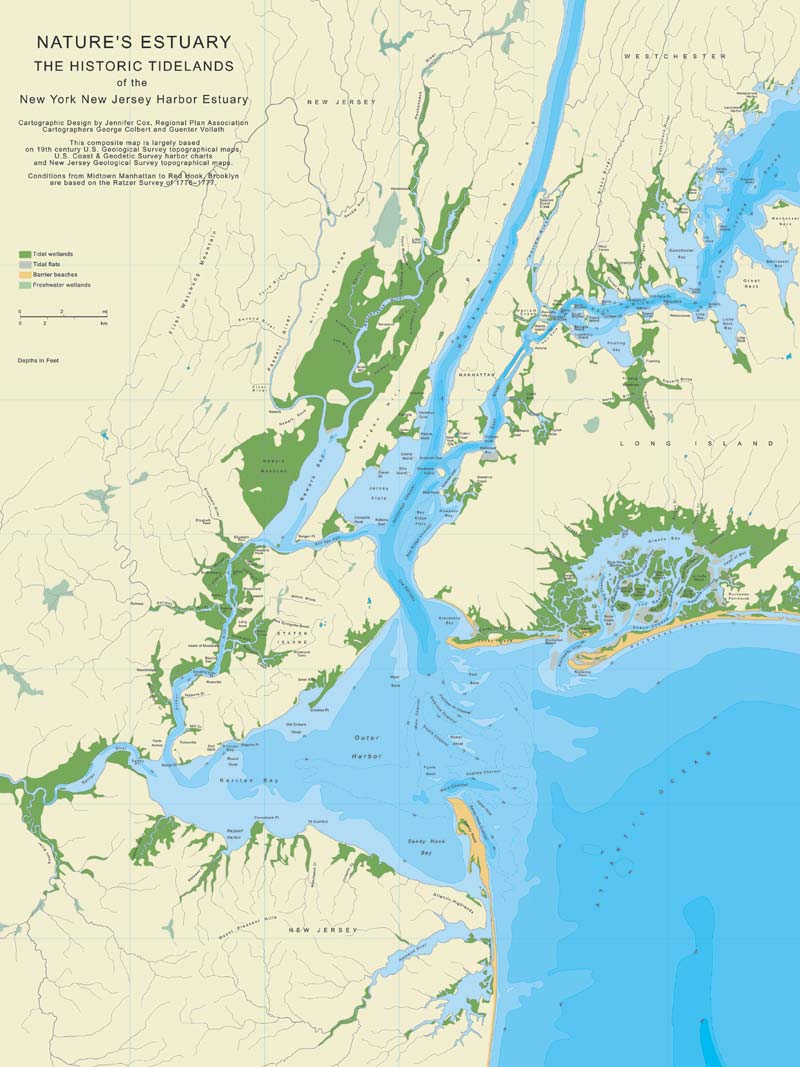
Over the past century our region’s saltwater marsh grass areas have been reduced by 85% due to development, pollution, and other urban pressures. HarborLAB started “Cordgrass in the Classroom” to help students understand this problem and participate in its solution. Now we are combining planting and paddling into event days that augment the efforts of those leading the challenging work of restoration. The Google gaggle took turns planting thousands of seedlings and kayaking around areas where they could see mature plants supporting shorebirds, invertebrates, and marine life. It was fun to introduce Google employees and interns to this work, and to deepen our relationship with Citizens Committee for NYC. Thanks in great part to Citizens Committee for NYC, we will soon plant spartina and other native species at our launch site on the Newtown Creek!

This event was an achievement for HarborLAB because despite being a small and young organization, we produced two simultaneous programs on June 1, this marsh grass restoration and nature paddles by canoe on Willow Lake in Flushing Meadows-Corona Park. HarborLAB Operations Manager EJ Lee was our on-site leader at Jamaica Bay and Executive Director Erik Baard made the arrangements for both events while leading on-site at Willow Lake.

All photos in the gallery are by American Littoral Society and Citizens Committee for NYC.

“Expedition to White Island”

photo 4 (2)

HarborLAB partnered with the Interdisciplinary Laboratory for Art, Nature, and Dance (iLAND) on Sunday to document, and elicit a creative response to, the restoration of marsh grasses, dune grasses, and other native life to White Island in Marine Park Preserve. Videographer Charles Dennis led the wonderful ‘iLANDing Expedition to White Island” as both guide and artist.

For HarborLAB this was an invaluable opportunity to build relationships with artists who care about ecology and might share their skills with the communities we serve. It was also a scouting mission to a new area of the harbor for us, Gerritsen Inlet, where we now plan to bring partner groups for beach cleanups and birding. We saw a great egrets, skillfully diving terns, reed-perching red winged blackbirds, an oyster catcher, a mated pair of Canada geese, herring gulls, great black backed gulls, black crested night herons, double crested cormorants, and an osprey atop, and circling, its nest platform.

Osprey platform. Rachel Carson's book "Silent Spring"  alerted the world about how the osprey and other species were vanishing because DDT insecticide spraying interfered with birds making strong egg shells. Now ecologists are helping helping ospreys to restore their numbers by building nesting platforms near food sources and away from harm. More here:  http://www.nhptv.org/wild/silentspring.asp  (Photo by Gil Lopez)

Osprey platform. Rachel Carson’s book “Silent Spring” alerted the world about how the osprey and other species were vanishing because DDT insecticide spraying interfered with birds making strong egg shells. Now ecologists are helping helping ospreys to restore their numbers by building nesting platforms near food sources and away from harm. More here: http://www.nhptv.org/wild/silentspring.asp (Photo by Gil Lopez)

The intertidal zones held marshes of spartina, but we could see clumps of the grass being undercut by erosion from below. Dense stands of invasive phragmites formed a feather-topped fence just a few paces upland from the water. At the foot of the reeds were glinting and colorful assortments of sea glass, complete antique bottles and glassware, and porcelain shards. Of course there were seashells of every kind and scattered bones, bleaching in the sun. White Island itself had various plantings dotting its sands like new hair plugs. As Charles Dennis described the mammoth operation to restore the island’s ecosystem, one could picture an amphibious assault by ecologists like a green D-Day.

The inlet itself was alive with horseshoe crabs, eels, other fish, sea weeds, and jellyfish. There was a mysterious pulsing buzz underwater that was almost certainly mechanical, not organic.

HarborLAB is grateful to iLAND, NYC Department of Parks and Recreation, and volunteers Gil Lopez (a green roofing instructor and certified permaculture landscape designer), Mairo Notton, and especially Patricia Erickson for making it possible to enjoy this outing, which was coordinated on the HarborLAB end by Erik Baard.

Cordgrass in the Classroom

10277811_10152460397609878_535280063104689233_n

Spartina nursery at the Greenhouse at the Greenbelt Native Plant Center on Staten Island. Photo by Erik Baard.

Our estuary is suffering great losses. In the past century, 85% of the New York and New Jersey area’s saltwater wetlands were destroyed by development and pollution. In 2012, the municipal government released its Wetlands Strategy as part of PlaNYC. The document also provides an excellent overview Independent nonprofits like the American Littoral Society, Regional Plan Association, and Riverkeeper, as well as state and federal initiatives like the Harbor-Estuary Program, have long advocated for protection and restoration through smarter growth and replanting.

HarborLAB Founder and Executive Director Erik Baard took the crisis as an opportunity for service learning across the city. He conceived “Cordgrass in the Classroom.” This distributed program, if fully realized, would affordably empower educators and students to improve our environment in a way that might integrate in standard curricula. Many thanks to the Greenbelt Native Plant Center and Murfie, a tech startup that digitizes and streams personal CD and vinyl music collections, for making this project possible. Expert consultants from Louisiana State University have also helped greatly.

A building block species for ecosystems in our bays and inlets is spartina, commonly known as cordgrass. Both names, ancient Greek and English, refer to how this marsh grass was used to make rope in olden times. Its greater value, however, is how it stabilizes shorelines with complex rhizomatic root systems. A dense area of cordgrass is called a “baffle,” and it collects silts and organic matter like an upside broom. This builds up to a rich, mucky more terrestrial habitat for invertebrates, other plants and fungi, and the shorebirds and mammals that eat them. Without cordgrass, you won’t see herons and egrets, and water erosion will strip coastal communities of storm protection.

Cordgrass in the Classroom takes inspiration from earlier successes like Trout in the Classroom, MillionTreesNYC, and the Billion Oyster Project. Erik introduced the program at the Steinway Branch branch of the Queens Library as part of Greening Queens Libraries initiative of the North Star Fund. Here’s how it went:

1) A dozen kids and six adults gathered in the library’s community room. They received New York-New Jersey Harbor Estuary Program posters of estuary life. Each participant was asked to name a living thing depicted in the poster until one teen said, “Grass.” The exercise highlighted how we easily overlook the organism that occupies the most space in the landscape and upon which the others depend.

2) A second page depicting wetlands let us discuss what an estuary saltwater wetlands is, as opposed to a beach or a freshwater swamp. We discussed how the complex root systems hold sand and silt together while the upper grasses feed butterfly larvae, provide shelter from predators, and are home to many creatures.

3) Modifying an idea from the Community Science Workshop Network, Erik taught the kids how to make mini-greenhouses from used CD cases donated by Murfie. Another option for local supplies for those not in a rush is NYC WasteMatch. This is a great opportunity to discuss recycling, the plaque of plastics, and how evolution is a constantly-adapting technology that doesn’t become obsolete. That said, even nature can overuse a technology to its near self-destruction; consider how the lignin that made trees possible may have later also overfed  microbes that excreted wastes that nearly smothered our world hundreds of millions of years ago.

Community Science Workshop Network (http://cswnetwork.org)

10253986_10152461243809878_7976149255700978969_n


10271500_10152461245114878_4288370042544891878_n

4) The Greenbelt Native Plant Center kindly supplied guidance along with sand and seeds in brine. Many thanks to HarborLAB Operations Manager Patricia Erickson for driving. At the library, the kids mixed sand, seeds (gathered from the wild), and water. They then smoothed that mixed into CD cases and shut them. When tilted toward the sun and sitting and sitting in a shallow layer of water, the seeds will germinate and blades will shoot upward. Thanks to the CD’s thinness, kids will watch the roots and shoots in a cross-section, much like an ant farm.

5) When the grass outgrows its CD case, it will be transplanted in bunches into small, biodegradable (wood fiber, peat blend) seedling pots, covering their root crowns. When the grass seedlings reach 6′-8″ high, they’ll be ready for transplantation into nature. Among possible sites are HarborLAB’s launch or Jamaica Bay. At our site, we might fill jute rice bags from Jackson Heights will sand and slash them to receive transplants. That, along with stones, might protect the new colony from being washed away by barge wakes.

A girl draws roots onto a CD case greenhouse schematic. Photo by Erik Baard.

A girl draws roots onto a CD case greenhouse schematic. Photo by Erik Baard.

For those wanting to create more ambitious CD case greenhouses, Erik built the one below in five minutes using clear tape. It can be built taller to protect more mature plants. Like the simpler form, there’s adequate ventilation.

Cubed CD case mini-greenhouse. Photo by Erik Baard.

Cubed CD case mini-greenhouse. Photo by Erik Baard.

Some have gone hog wild with CD case greenhouses. For walk-in sized greenhouses made of reused plastics, many opt for discarded bottles.

Great HarborLAB Launch Work Party!

100_0907

Boat launch property before most work hard begun. Photo by Wesley Miller.

HarborLAB volunteers cleaned up our 125′ x 21′ waterfront space and installed a boat launch so that in 2014 we can offer more frequent programming, host and assist student research projects, and bring robust community life and a richer ecosystem to the shore. We’re very grateful to Community Board 2 Environmental Chair Dorothy Morehead for storing our boats for the summer in the yard behind her Sunnyside office, with our gear and materials in her basement.

Our space, which is at the end of Vernon Boulevard, is generously provided by Schuman Properties (family owned, along with Propper Manufacturing). We have great co-tenants, including the Circus Warehouse. The chief inspiration for the site revamp was our recent purchase of a boat trailer from Jersey Paddler. Other recent funds enabled us to budget for security cameras, locks and chains, sheds, and property improvements.

The property was unusable due to Hurricane Sandy debris and recovery period dumping, as well as loose pallets of bricks and dense and extensive weed growth. The crumbling bulkhead also left us with a steep and unstable gradient. The first reclamation work was done by Wesley Miller, who single-handedly weeded much of the tract, allowing a trailer to roll in while leaving weeds that held down soil on slopes. Wesley also restacked bricks that fell from pallets.

Then came HarborLAB’s work party! Our labor was fueled by amazing Italian food from Manducatis Rustica, which is further up Vernon Boulevard. We were glad to welcome three new volunteers, Dr. Minerva Ahumada (professor of philosophy at LaGuardia Community College — and boy do her students love her!), David Pugh (a Time’s Up! activist referred to us by HarborLAB board member Joel Kupferman, founder of the NY Environmental Law and Justice Project), and artist Becky Chipkin.

Schuman Properties kindly ordered a dumpster, which ten volunteers filled rapidly with all manner of junk. We also moved thousands of bricks by hand, assembly line style, to further open up space near the gate. We also installed a mailbox, began gate repairs, and installed a wooden boat launch. LIC-based artist and sailor Ilan Averbuch creates massive sculptures, so he’s offered to help move some pallets of bricks with his forklift.  HarborLAB Facilities Manager Patricia Erickson oversaw all work, while Mairo Notton particularly focused on our boat launch.

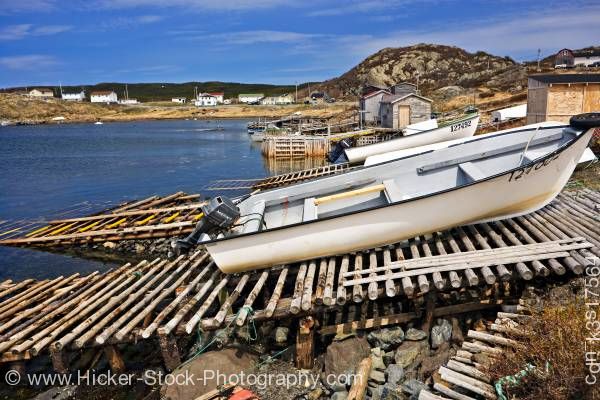
Our boat launch is inspired by Viking-style wooden ramps, which Rob Buchanan of the Village Community Boathouse also called a “dory ladder.” These are still in common use, for example in Newfoundland. In our case, to save time and some of HarborLAB’s budget, Founder Erik Baard donated his futon frame. Whatever works!

Future plans include salt-tolerant native species to hold the shoreline together, spartina marsh grass planting, a work platform for research, a dock, shipping containers for storage once the bricks are removed this winter, and much more! We’re also working to ensure our improvements are inclusive of the sailors already present, with stronger tie-ups, stairs and paths down (also sparing planted areas), and community building activities.

100_0898

Overgrown space with dumping, including heavy buckets with unknown contents. Photo by Wesley Miller.

100_0887 (1)

Some of the many bricks on the site that had to be moved and stacked. In total, there are perhaps 50,000 bricks. Photo by Wesley Miller.

1236829_10151903209059878_350398135_n

Now the work can begin with gusto — the dumpster arrives! Photo by Erik Baard.

WP_20130907_027

Volunteer Co-Manager Caroline Walker lassos the gate post to pull it upright, while Facilities Manager Patricia Erickson directs from below and sets the line.

1238061_10151904319324878_1130486417_n

Sally Attia, Mairo Notton, and David Pugh install the boat ramp, which Mairo assembled out of Founder Erik Baard’s futon frame. David’s shirt also provides a great chance to salute pioneering urban environment group Time’s Up! Photo by Erik Baard.

WP_20130907_030

Mairo Notton tests the repelling aspect of his boat ramp masterpiece. Photo by Erik Baard.

WP_20130907_029

David Pugh and Becky Chipkin inaugurate the boat ramp, both launching and landing, while Sally Attia helps. . Photo by Erik Baard.

WP_20130907_016

David Pugh, Sally Attia, and Manny Steier organize the huge task of moving bricks out our working area. Patricia Erickson was the spur and inspiration that made us believe we could do it in a day. Photo by Erik Baard.

WP_20130907_036

Mairo Notton upped the ante in brick carrying, with 15 at a time. Sometimes 18, simply to show off. He also tested Erik Baard’s ability to do so — Erik passed, but this remained Mairo’s signature achievement. Photo by Erik Baard.

1238310_10151904422629878_1637555321_n

More bricks, bricks, bricks. We did it in a continual human chain, with specialized stackers at either end. Here camera shy Dr. Minerva Ahumada, professor of philosophy at LaGuardia Community College, scoots out of frame while HarborLAB Operations Manager EJ Lee enters. One wonders if the myth of Sisyphus prepared Minerva for this task. Photo by Erik Baard.

WP_20130907_035

We still had time for love. David Pugh, Becky Chipkin, a dumpster, a sign warning of the END, and the new World Trade Center rising over the Newtown Creek mouth. Photo by Erik Baard.

1176147_10151905039039878_407909366_n

In an unusual move, a seaplane used the Newtown Creek as a runway — toward Manhattan. Photo by Erik Baard.

WP_20130907_050

Making us more official, Facilities Manager Patricia Erickson and Mairo Notton install a mailbox by the gate. Photo by Erik Baard.

WP_20130907_057

As we feasted on Manducatis Rustica’s food, our North Brooklyn Boat Club neighbors across the Newtown Creek set off on an overnight Manhattan circumnavigation. We called out our well wishes for the canoeists, kayakers, and rowers. Photo by Erik Baard.

WP_20130908_012

In daylight we saw the full dumpster. Photo by Erik Baard.

WP_20130911_005

And off goes the site junk! Photo by Erik Baard.

WP_20130908_004

Canoes and trailer on site and secured. Kayaks to soon follow. Photo by Erik Baard.